
Fire Fighting System Installation - Hydrant & Sprinkler Systems - Gujarat & India
Fire Systems Pvt. Ltd. is a premier class-A fire fighting contractor in Gujarat. We design, supply, install, test, commission, and maintain high-reliability wet riser, fire hydrant, automatic sprinkler, sprinkler control valve, fire pump room, and water storage systems in compliance with NBC 2016 and IS 13039 / IS 15105 standards.
What Is a Fire Fighting System?
A fire fighting system refers to the fixed water-based fire suppression infrastructure installed in a building or industrial facility - primarily fire hydrant systems and automatic sprinkler systems. Unlike fire alarm systems that detect and warn, and gas suppression systems that suppress electronically controlled fires, fire fighting systems provide the water supply and distribution infrastructure for both manual firefighting by trained personnel and automatic suppression of fire in its early stages.
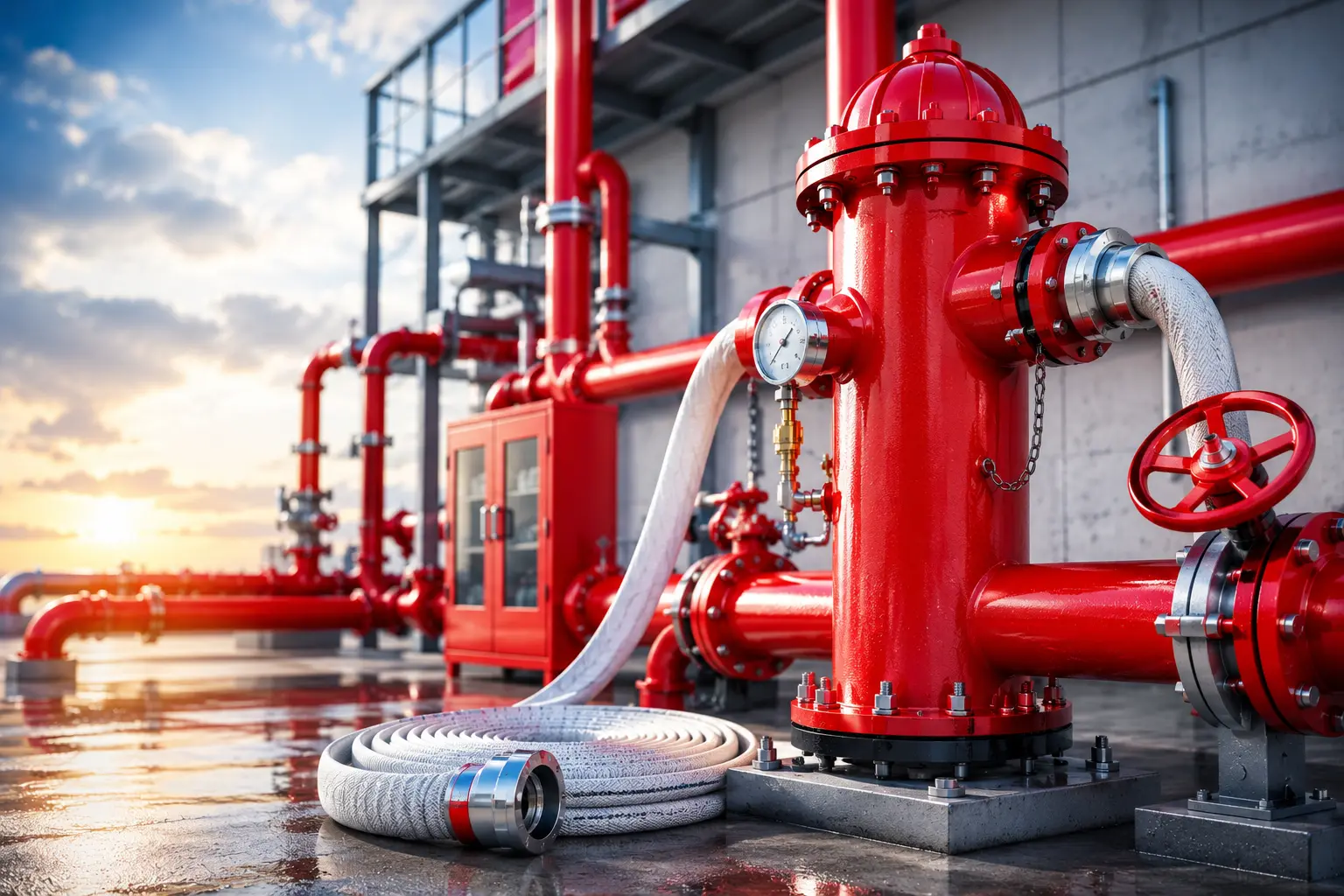
Fire Hydrant Systems
A fire hydrant system provides the engineered water supply infrastructure for manual firefighting operations. The system comprises an underground ring main (or header main), fire pumping sets, terrace-level fire reserve tanks, internal and external hydrant points, hose reel cabinets, landing valves, and branch pipe assemblies.
Underground Ring Main
The header main pipe loop (usually carbon steel or ductile iron) that surrounds the facility to maintain uniform water pressure at all points.
Fire Pumping Sets
High-capacity centrifugal pumps including main electric pump, standby diesel engine pump, and jockey pump to maintain loop pressure automatically.
Water Storage Tanks
Large dedicated water storage reserves, combining underground static suction tanks and terrace-level gravity reserve tanks.
Landing Valves
Heavy-duty double-headed or single-headed landing valves installed on wet risers, allowing fire hose connection per IS 5290 specifications.
Hose Reel Cabinets
Weatherproof wall cabinets housing high-pressure synthetic rubber hoses, manual first-aid hose reels, and branch pipe nozzles.
Branch Pipe Assemblies
Heavy-duty brass or stainless steel nozzles that shape and direct the high-velocity water jet during manual firefighting operations.
Key Components of a Fire Hydrant System
| Component | Function | Standard Reference |
|---|---|---|
| Underground ring main | Primary water distribution pipeline | IS 3844 |
| Fire pumping set (Main + Jockey + Diesel) | Maintains system pressure and provides fire flow | IS 3844, TAC |
| Terrace-level fire reserve tank | Gravity storage for fire fighting water | NBC 2016 Part 4 |
| Internal hydrant valve (ISI) | Connection point for fire hose inside building | IS 5290 |
| External hydrant (underground/pillar) | Firefighting access point on building perimeter | IS 908 |
| Hose reel cabinet | Fixed first-aid fire hose for occupant use | IS 884 |
| Landing valve (wet riser) | Floor-level connection point in multi-floor buildings | IS 5290 |
| Branch pipe and nozzle | Directs water stream at fire | IS 903 |
Fire Hydrant System Design - Key Parameters
Flow Rate Calculation
Calculated accurately from occupancy risk and building classification guidelines per TAC / IS 3844.
Residual Pressure
Ensuring minimum required residual water pressure at the remotest/highest hydrant landing valve.
Water Reserve Sizing
Minimum storage capacities for sustained firefighting durations (typically 30–60 minutes per TAC).
Pump Station Configuration
Detailed sizing for main electric pump, jockey pump (for pressure upkeep), and standby diesel backup pump.
Ring Main Network Sizing
Hydraulic calculation loops to ensure adequate, uniform water flow and pressure distribution across the network.
Suction & Delivery Pipelines
Heavy-duty suction and header pipes engineered to withstand pressure surges and comply with IS 3844.
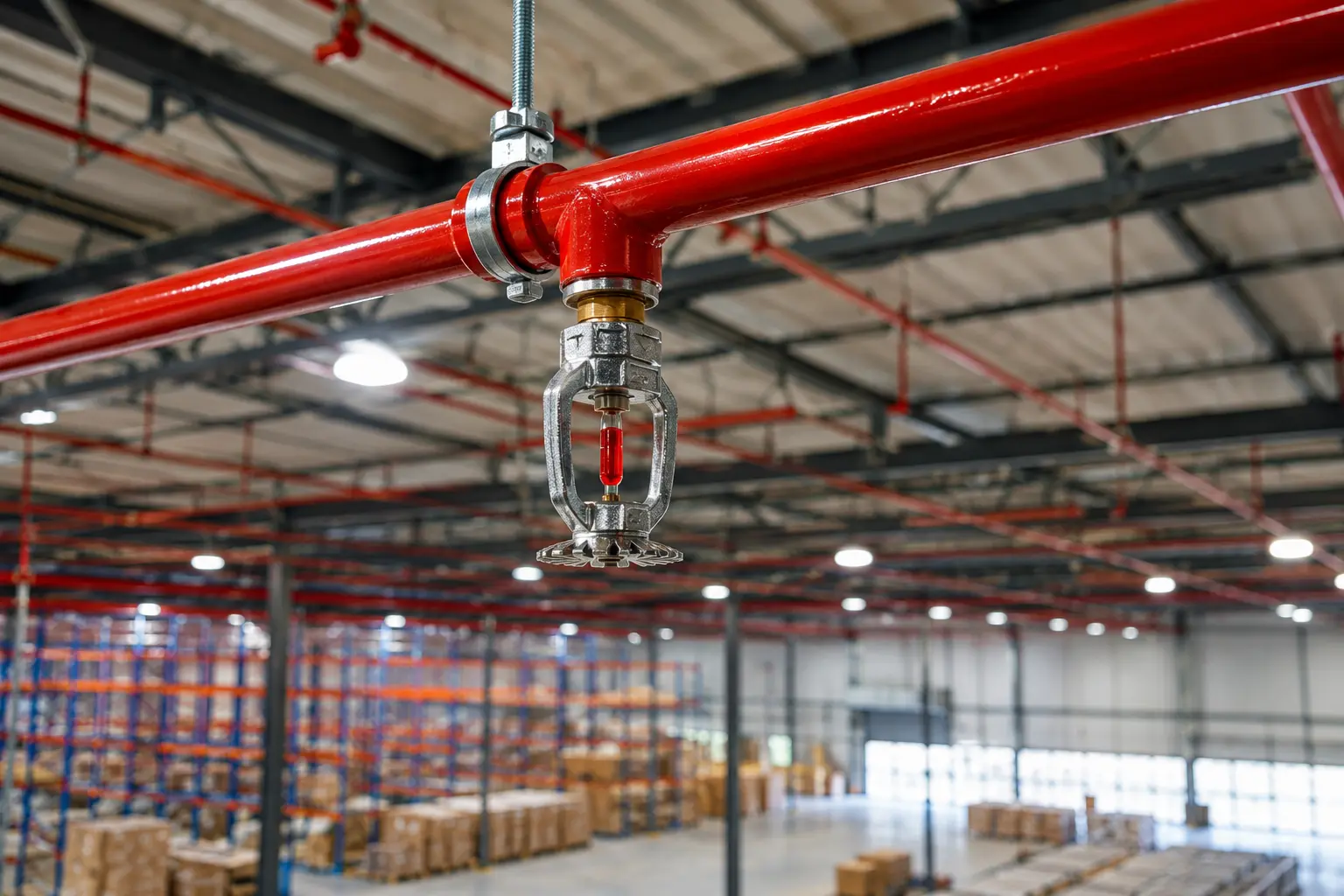
Automatic Sprinkler Systems
Automatic sprinkler systems are the most widely deployed and proven automatic fire suppression technology in the world. A sprinkler system consists of a network of pressurised water-filled pipes with heat-sensitive sprinkler heads at regular intervals. When heat from a fire causes the temperature at a sprinkler head to reach its activation threshold (typically 68°C for standard response, 93°C for high-temperature environments), the glass bulb or fusible link in the head fractures, the cap releases, and water discharges directly onto the fire.
Types of Sprinkler Systems
| System Type | Description | Best For |
|---|---|---|
| Wet Pipe | Pipes always filled with pressurised water | Standard occupancies - fastest response |
| Dry Pipe | Pipes filled with pressurised air - water enters on activation | Cold storage, unheated spaces |
| Pre-Action | Requires both sprinkler activation AND detection signal - double interlock |
Double Interlock Server rooms, data centres, archival storage |
| Deluge | All heads open simultaneously - controlled by detection system | High-hazard: aircraft hangars, flammable liquid areas |
Sprinkler Head Selection
| Parameter | Options | Selection Basis |
|---|---|---|
| Response type | Standard Response, Quick Response, Extended Coverage | Occupancy and ceiling height |
| Temperature rating | 57°C (standard), 68°C, 79°C, 93°C, 141°C, 182°C | Ambient temperature of installed area |
| Orientation | Pendant, Upright, Sidewall, Concealed | Ceiling type and aesthetic requirement |
| Coverage area | Standard (9–12 sq.m.), Extended Coverage (up to 20 sq.m.) | Room layout and system economics |
| K-factor | K5.6, K8.0, K11.2, K14.0, K22.4 | Hazard classification and water supply |
Standards & Compliance
All hydrant, sprinkler, and pumping installations are engineered, tested, and certified in strict accordance with national and international code directives:
IS 3844
Code of Practice for Installation and Maintenance of Internal Hydrant and Hose Reel Systems.
IS 15105
Detailed design, piping network calculations, and installation guidelines for Fixed Automatic Sprinkler systems.
TAC Guidelines
Tariff Advisory Committee standards - insurance-mandated sprinkler and hydrant design rules widely used in India.
NBC 2016 Part 4
National Building Code regulations specifying which occupancies and building heights require sprinkler/hydrant systems.
NFPA 13
National Fire Protection Association standard - widely referenced globally and in India for high-hazard industrial sprinkler designs.
Hydraulic Design & NOC Documentation
Every fire fighting system we design includes full hydraulic calculations - pipe friction loss, pressure at remotest point, pump duty point, and storage volume. These calculations form the basis of the system design and are submitted as part of the fire NOC application to Gujarat Fire & Emergency Services. We prepare all NOC documentation in the format required by the local fire authority.
Frequently Asked Questions - Fire Fighting Systems
Find answers to common questions about fire hydrant and sprinkler system installations, regulations, and NOC approvals:
Under NBC 2016 Part 4 and the Gujarat Fire Prevention Act, fire hydrant systems are mandatory for industrial buildings above specified floor areas and occupancy types. The TAC standard additionally specifies hydrant requirements as a condition of fire insurance coverage for industrial facilities. Gujarat Fire & Emergency Services assess hydrant system adequacy during fire NOC inspection.
A fire hydrant system provides water supply points for manual firefighting by trained personnel or fire brigade. A sprinkler system automatically activates when a specific sprinkler head is exposed to sufficient heat - providing automatic suppression without human intervention. Both systems are often required together in industrial and commercial buildings.
No. Standard sprinkler heads are activated by heat at the individual head - not by smoke detection or fire alarm signals. Each head has a heat-sensitive glass bulb that fractures at a specific temperature. Only pre-action and deluge systems require an additional detection signal before water is released.
TAC requires a minimum residual pressure of 3.5 kg/cm² (35 metres head) at the remotest hydrant outlet with the system flowing at design flow rate. The pump set is sized to deliver this pressure at the required flow.
Yes. We prepare fire hydrant and sprinkler system drawings, hydraulic calculations, and specifications in the format required by Gujarat Fire & Emergency Services for fire NOC submission. We have extensive experience with the documentation requirements of Gujarat fire authorities.
Design & Install Certified Fire Suppression Systems
We serve Ahmedabad, Surat, Vadodara, Rajkot, Gandhinagar, and all of Gujarat. Contact us today for a free design consultation, hydraulic calculations, GIDC permissions, and project quotation.
Request a Site Survey
Schedule a visit from our certified safety engineers for a customized hydrant/sprinkler layout design and project quotation.
Response within 24 Hours · Zero Obligation