
Gas Leak Detection System Installation in Ahmedabad, Gujarat & Across India
Fire Systems Pvt. Ltd. is a leading safety and security contractor in Gujarat. We design, supply, install, commission, and maintain high-reliability LPG, PNG, and industrial gas leak detection systems equipped with automatic gas shut-off valves for kitchens, commercial food courts, pharmaceutical plants, chemical factories, and laboratories across Ahmedabad, Gujarat, and India.
What Is a Gas Leak Detection System?
A gas leak detection system continuously monitors the air in a defined area for the presence of combustible or toxic gases - including LPG (liquefied petroleum gas), PNG (piped natural gas), CNG, hydrogen, ammonia, carbon monoxide, and industrial process gases. When gas concentration reaches a set threshold, the system triggers an audible alarm, visual warning, and optionally an automatic gas shut-off valve - allowing occupants to evacuate and preventing the gas concentration from reaching the Lower Explosive Limit (LEL).
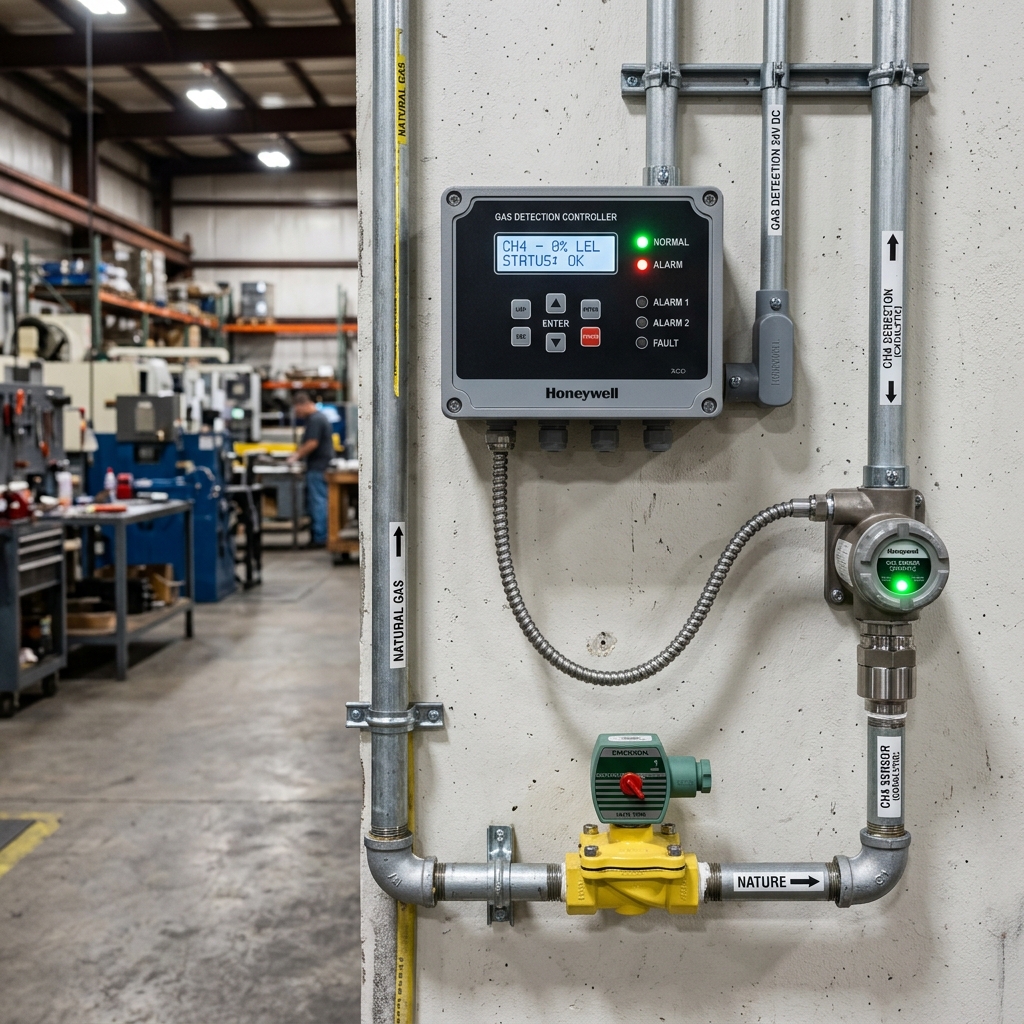
Critical Installation Requirement - Detector Height
Under safety guidelines, the physical placement of gas leak sensors must align with the molecular density of the gas being monitored. Installing sensors at the incorrect height renders the system ineffective.
Types of Gas Detectors
We deploy various sensor technologies depending on the type of gas being monitored, the environment, and the budget.
| Detector Type | Gas Detected | Technology | Application |
|---|---|---|---|
| Catalytic bead (pellistor) | Combustible gases (LPG, methane, hydrogen) | Catalytic oxidation | Commercial kitchens, boiler rooms, industrial |
| Electrochemical | Toxic gases (CO, H₂S, NH₃, Cl₂) | Electrochemical reaction | Industrial plants, confined spaces |
| Infrared (IR) | Combustible gases (methane, LPG, CO₂) | IR absorption | Industrial, offshore, harsh environments |
| Semiconductor | Combustible and toxic gases | Metal oxide resistance change | Low-cost residential/commercial |
| Photoionisation (PID) | VOCs and organic vapours | UV photoionisation | Chemical plants, solvent areas |
System Components
An integrated industrial or commercial gas detection setup combines multiple safety layers for automatic detection, warning, and mitigation:
Gas Detector Head (Sensor)
Installed at the correct height for the specific gas (LPG is heavier than air - detector near floor level; methane/PNG is lighter than air - detector near ceiling level).
Gas Detection Controller/Panel
Processes sensor signal, activates alarms, and controls output relays.
Audible Alarm Sounder
Mounted near the detection area for immediate occupant alert.
Visual Alarm (Beacon)
Flashing beacon/strobe warning designed specifically for high-noise environments.
Automatic Gas Shut-off Valve
Solenoid valve installed on the gas supply line, closing automatically on alarm to stop the leak.
Remote Relay Outputs
Sends output signals directly to the fire alarm panel, BMS, or ventilation control.
Where Gas Leak Detection Is Mandatory or Essential
Any facility utilizing gas lines, process chemicals, or confined storage areas requires continuous safety monitoring:
Commercial Kitchens
LPG and PNG leak monitoring in restaurants, hotel kitchens, and institutional canteens.
PNG Piped Supply
Safety monitoring for residential complexes and commercial buildings with piped natural gas supply.
Vehicle Storage & Stations
Gas monitoring in CNG/LPG vehicle storage facilities and public/private filling stations.
Boiler & HVAC Plant Rooms
Continuous LEL monitoring in industrial boiler rooms and commercial HVAC plant rooms.
Pharma & Chemical Plants
Safety systems for pharmaceutical and chemical manufacturing plants with multiple process gases.
Laboratories
Critical gas monitoring in research and educational institution laboratories.
Paint Spray Booths
Solvent vapour detection and automatic ventilation linkage in industrial paint booths.
Cold Stores (Ammonia)
Toxic ammonia refrigerant leak detection systems in agricultural and chemical cold storages.
Confined Spaces
Continuous monitoring in utility tunnels and spaces prone to lethal carbon monoxide (CO) accumulation.
Frequently Asked Questions - Gas Leak Detection Systems
Find answers to common questions about gas leak detection systems, calibrations, alarm thresholds, and fire alarm integrations:
NFPA 96 (which is referenced in many Indian municipal fire safety regulations) and several state fire authorities' guidelines recommend or require gas leak detection in commercial kitchens. Many insurance policies for hotel and restaurant operations require gas detection as a condition of coverage. We advise checking local fire authority requirements for your specific premises.
Gas detectors should be functionally tested every 6 months and calibrated with certified test gas annually. Catalytic bead detectors can be poisoned by silicone compounds and certain chemicals - in environments with potential catalyst poisons, more frequent testing is recommended.
Most gas detection systems are set to trigger a warning alarm at 10–20% LEL (Lower Explosive Limit) and a high alarm at 40–50% LEL. The LEL for LPG is 1.8% by volume in air - so a 20% LEL alarm triggers at approximately 0.36% LPG concentration - well below the danger threshold.
Yes. Gas detection controllers provide relay output contacts that connect to the fire alarm panel - triggering a fire alarm zone or an input module when gas is detected. This provides a unified alarm response through the building's fire alarm infrastructure.
Protect Your Facility Against Gas Hazards Today
We serve Ahmedabad, Surat, Vadodara, Rajkot, Gandhinagar, and all of Gujarat. Contact us today for a free gas safety audit, detector layout proposal, and solenoid valve specifications.
Request a Site Survey
Schedule a visit from our certified security engineers for a customized gas detection layout design and project quotation.
Response within 24 Hours · Zero Obligation